
AI Robotics · Flagship research objective
Autonomous Neurosurgery Research
AI and robotic engineering for the complex anatomy and precise movements of brain and spinal surgery.
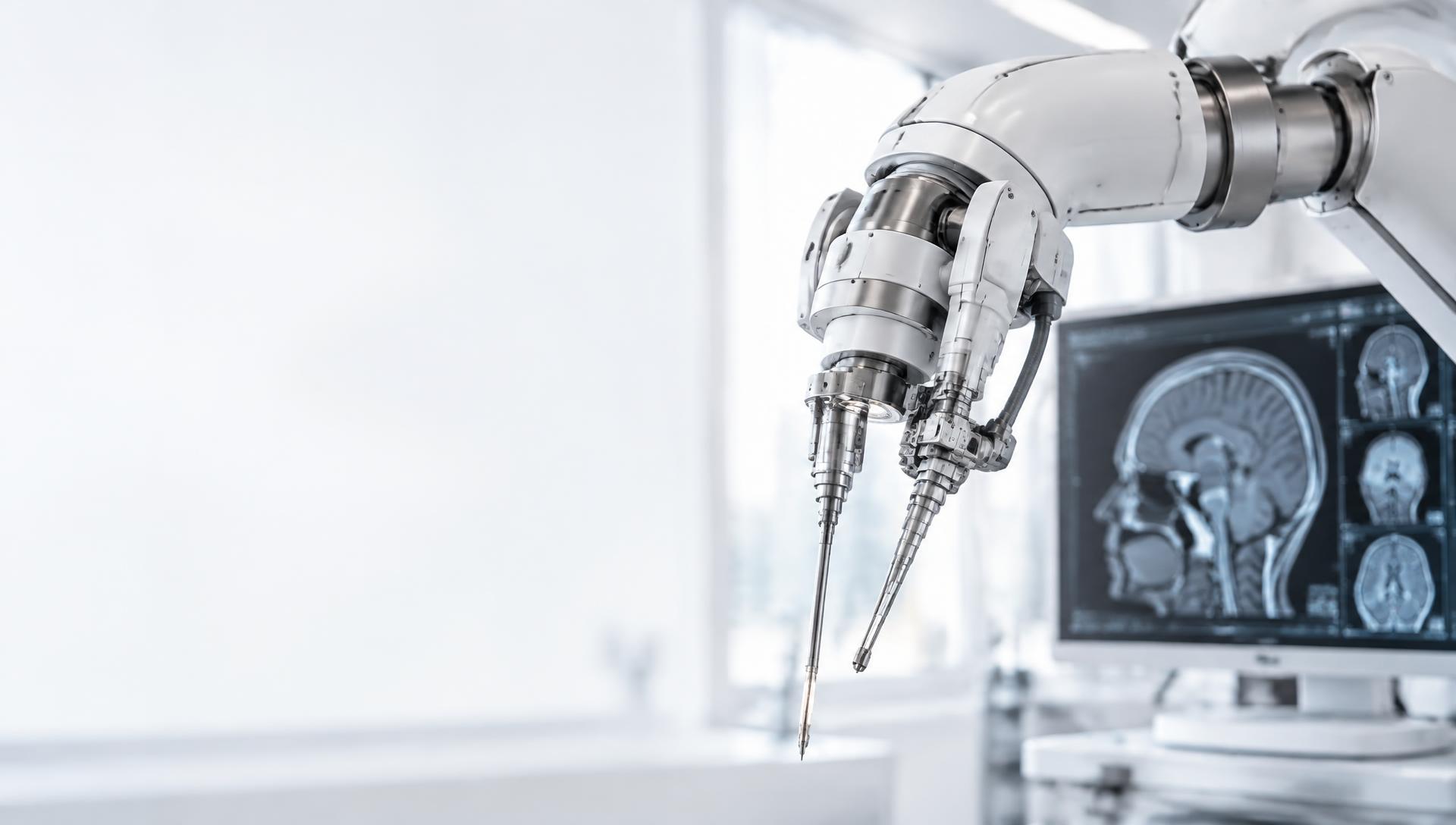
ENGINEERING IN MOTION
Look closer.
Precision is in the details.
Three perspectives on surgical robotics.
Explore the Precision Arm, ROSA, and da Vinci.
Explore the ROSA arm, wrist, and stereotactic instrument guide.
Interactive 3D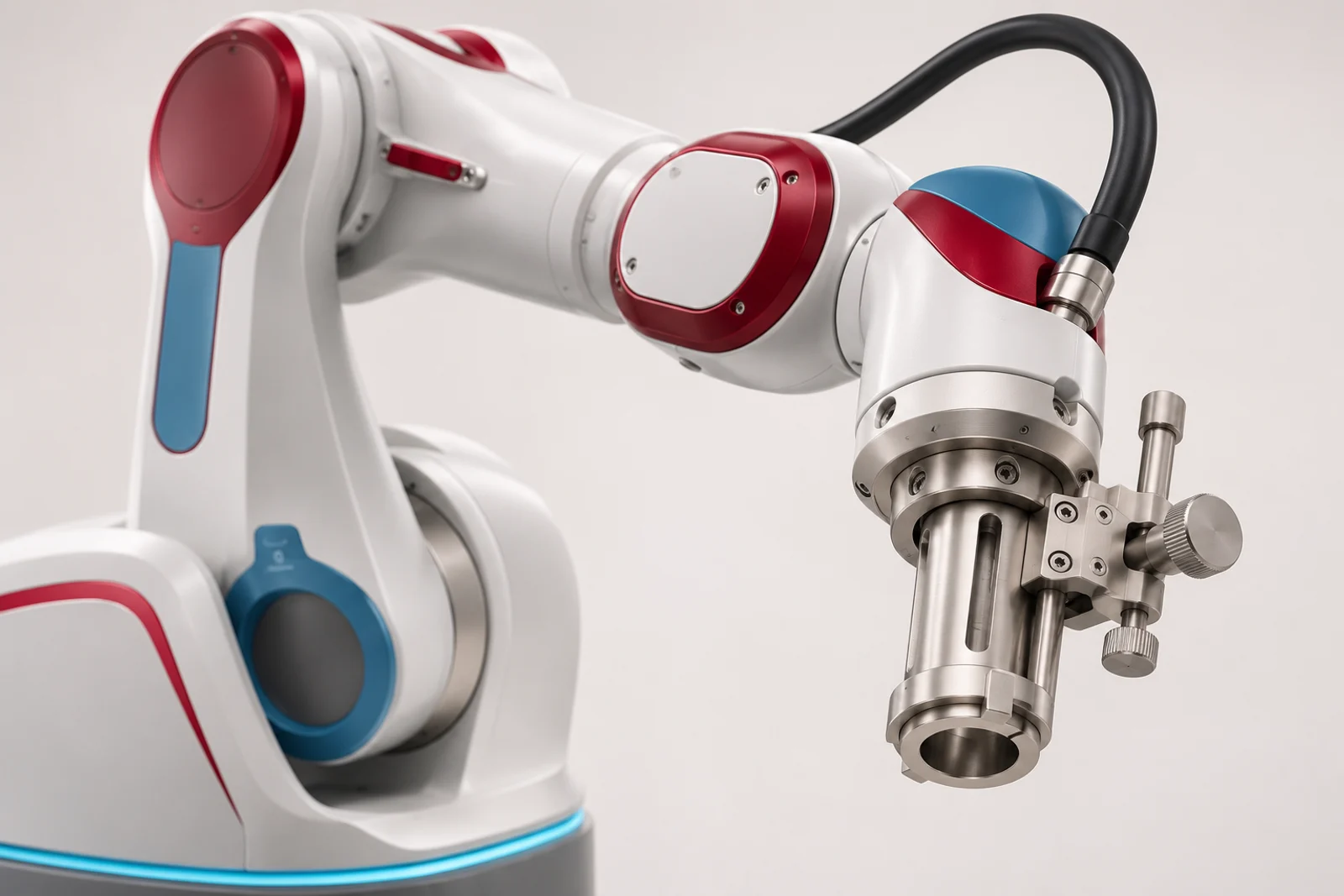
3D visualization
A platform for precise neurosurgical access.
Explore the distinctive compact arm and articulated joints. Our work on new ROSA instrumentation connects this mechanical foundation with AI perception, planning, and control.
ROSA is a Zimmer Biomet platform. Platform details ↗
Why neurosurgery
Brain and spinal surgery brings delicate anatomy, limited access, and demanding precision into the same operating field. Our autonomous neurosurgery programme addresses these challenges through medical AI, advanced instrumentation, and robotic control.
Understanding the surgical field
Our work connects medical images with anatomical interpretation and spatial information. Important structures, access corridors, and changes in the operating environment all inform the planning process.
Planning and robotic execution
We connect image understanding, trajectory planning, instrument positioning, and sensor feedback. New ROSA instrumentation and da Vinci research are part of this work toward autonomous surgical workflows.
Brain and spinal tumours
We focus on complex brain and spinal canal tumours, including cases where access and proximity to critical structures create exceptional difficulty. This focus shapes our work in imaging, navigation, and precise instrument movement.
Clinical and engineering collaboration
We work across the questions that matter to neurosurgeons, imaging specialists, robotics engineers, and researchers. Contact us to discuss a technical evaluation or a focused collaboration.