
AI Robotics · Research foundations
Safety, Simulation, and Validation
Safety engineering, simulation, and testing across surgical AI, instrumentation, and robotic workflows.
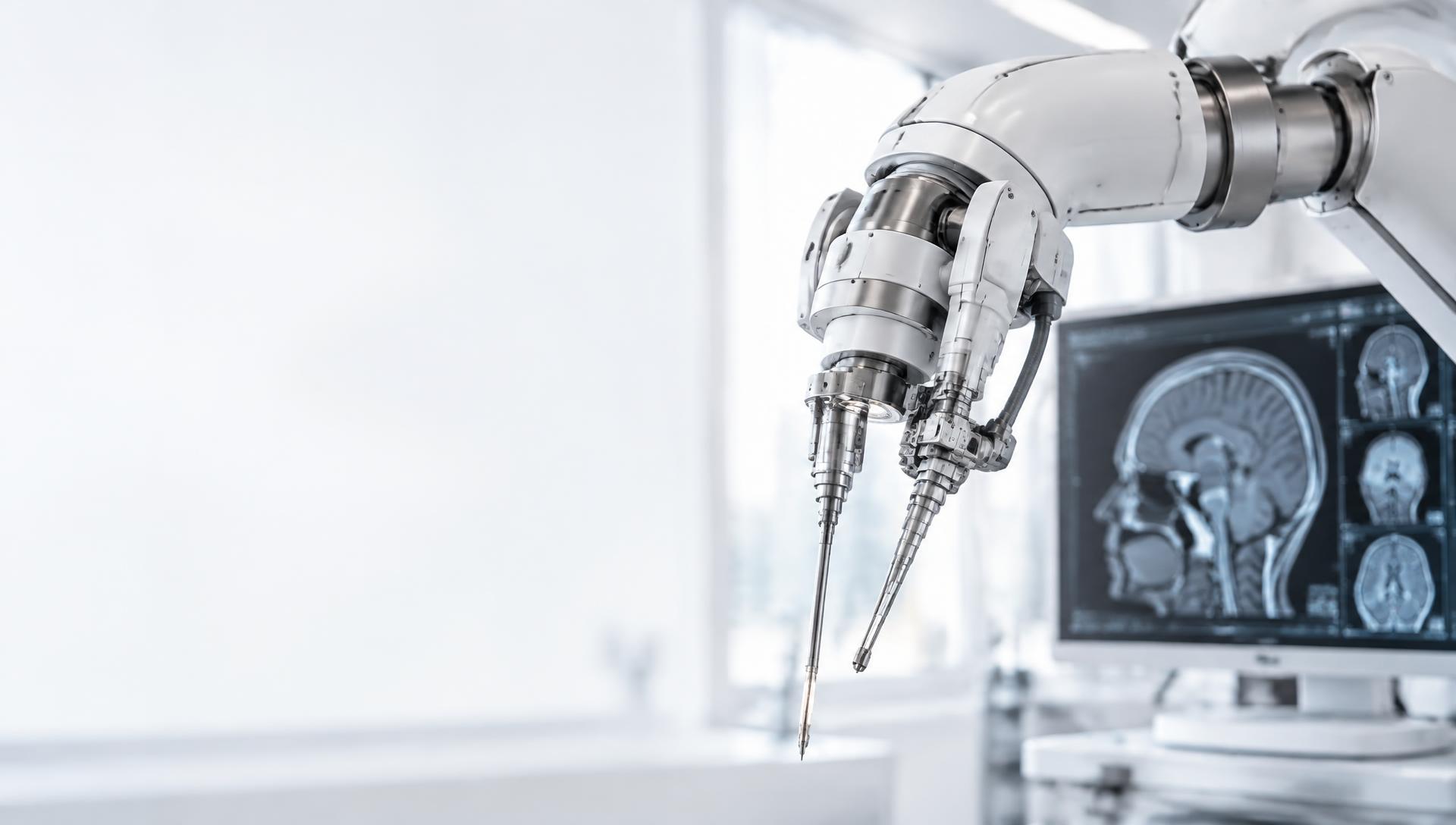
ENGINEERING IN MOTION
Look closer.
Precision is in the details.
Three perspectives on surgical robotics.
Explore the Precision Arm, ROSA, and da Vinci.
Explore the ROSA arm, wrist, and stereotactic instrument guide.
Interactive 3D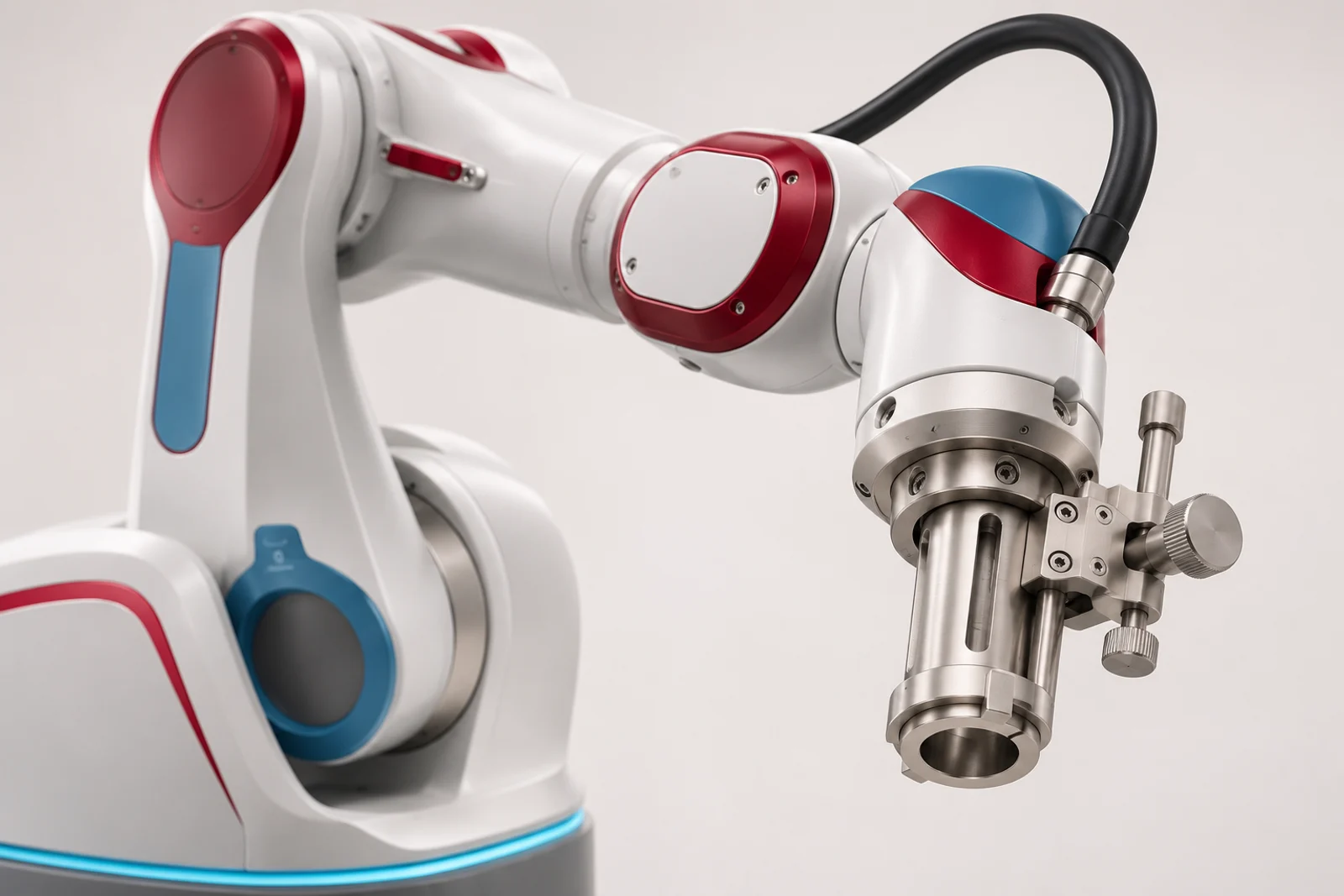
3D visualization
A platform for precise neurosurgical access.
Explore the distinctive compact arm and articulated joints. Our work on new ROSA instrumentation connects this mechanical foundation with AI perception, planning, and control.
ROSA is a Zimmer Biomet platform. Platform details ↗
Safety across the full workflow
We consider safety throughout imaging, interpretation, planning, robotic movement, and feedback. Clear operating boundaries and defined human responsibilities support this work.
Simulation and controlled testing
Simulation and bench testing help examine component behaviour, integrated workflows, and response to changing conditions. We use these settings to investigate instrument motion, sensing, and system interactions.
Fault detection and response
Our engineering focus includes unexpected inputs, deviations from a plan, communication failures, and controlled stopping. These questions are part of designing a system that can recognize and respond to problems.
Traceable evaluation
Test configurations, intended tasks, acceptance criteria, and results need to be clear and reproducible. This provides a practical foundation for technical review and further development.
Multidisciplinary review
Clinicians, safety engineers, human factors specialists, and robotics researchers bring different perspectives to evaluation. We welcome collaborators who can help address a specific challenge.